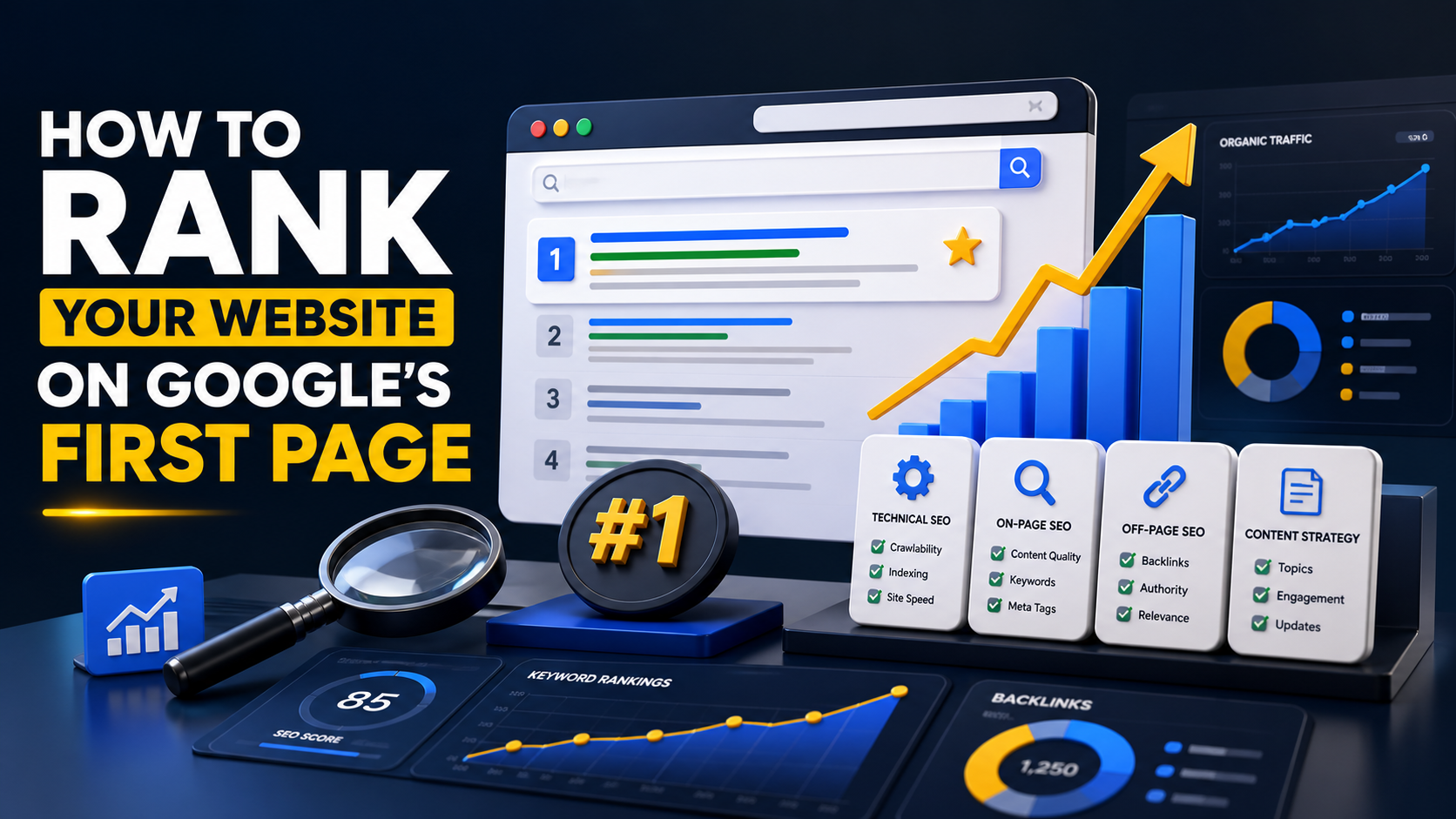
How to Rank Your Website on Google's First Page
Ranking on Google's first page is one of the most effective ways to increase website traffic, generate qualified leads, and grow your business. With millions of websites competing for attention, achieving top rankings requires a combination of high-quality content, technical optimization, user experience, and authority building.
In 2026, Google's algorithms prioritize helpful content, fast-loading websites, mobile usability, search intent, and trustworthiness. By following proven SEO strategies, businesses can improve their visibility and attract long-term organic traffic.
1. Perform Keyword Research
Every successful SEO campaign starts with keyword research.
- Search Volume
- User Intent
- Competition Level
- Business Relevance
- Long-Tail Opportunities
Choose keywords based on:
Target primary, secondary, and semantic keywords throughout your content.
2. Create High-Quality Content
Google rewards content that provides real value.
- Original
- Informative
- Well Structured
- Easy to Read
- Updated Regularly
- Focused on User Intent
Your content should be:
Include headings, images, examples, FAQs, and actionable tips.
- SEO-Friendly Title Tag
- Meta Description
- H1 Heading
- H2 & H3 Headings
- Keyword Optimization
- Internal Links
- External References
- Image Alt Text
- SEO-Friendly URLs
3. Optimize On-Page SEO
Every page should include:
Well-optimized pages improve crawlability and rankings.
4. Improve Website Speed
Page speed is a ranking factor and directly affects user experience.
- Compressing Images
- Using Browser Caching
- Minifying CSS & JavaScript
- Using a CDN
- Optimizing Server Response
- Enabling Lazy Loading
Improve performance by:
Faster websites reduce bounce rates and improve conversions.
5. Make Your Website Mobile-Friendly
Most users browse on smartphones, making responsive design essential.
- Works on All Devices
- Loads Quickly
- Uses Readable Fonts
- Has Easy Navigation
- Offers Touch-Friendly Buttons
Ensure your website:
A mobile-friendly website improves both rankings and user satisfaction.
6. Focus on Technical SEO
Technical SEO helps search engines understand your website.
- XML Sitemap
- Robots.txt
- Canonical Tags
- HTTPS Security
- Structured Data
- Crawl Error Fixes
- Clean URL Structure
Key areas include:
Regular technical audits keep your website healthy.
7. Build High-Quality Backlinks
Backlinks remain one of Google's strongest ranking signals.
- Guest Posting
- Digital PR
- Resource Pages
- Industry Directories
- Quality Content
- Partnerships
Earn links through:
Focus on relevance and authority rather than quantity.
8. Optimize for Local SEO
If you target local customers, optimize for location-based searches.
- Optimize Google Business Profile
- Collect Customer Reviews
- Use Local Keywords
- Add Location Pages
- Maintain Consistent Business Information
Best practices:
Local SEO increases visibility in Google Maps and local search results.
9. Improve User Experience (UX)
Google rewards websites that provide a positive user experience.
- Clear Navigation
- Fast Loading
- Easy-to-Read Content
- Clean Design
- Logical Page Structure
- Helpful CTAs
Focus on:
Happy users stay longer and engage more.
10. Publish Content Consistently
Regular publishing signals that your website is active.
Content ideas:
- Blog Posts
- Industry News
- Tutorials
- Case Studies
- FAQs
- Comparison Articles
- Success Stories
Fresh content helps attract new visitors and improve rankings.
11. Track SEO Performance
Use analytics tools to monitor progress.
- Organic Traffic
- Keyword Rankings
- Click-Through Rate (CTR)
- Bounce Rate
- Conversions
- Indexed Pages
- Backlink Growth
Track:
Regular analysis helps refine your SEO strategy.
12. Optimize for AI and Voice Search
Search behavior is evolving with AI-powered search and voice assistants.
- Answering Common Questions
- Using Natural Language
- Adding FAQ Sections
- Implementing Structured Data
- Targeting Conversational Keywords
Optimize by:
These practices improve visibility in modern search experiences.
- Common SEO Mistakes to Avoid
- Keyword Stuffing
- Duplicate Content
- Slow Website Speed
- Poor Mobile Experience
- Broken Links
- Ignoring Technical SEO
- Low-Quality Backlinks
- Thin Content
- Missing Meta Tags
- Not Updating Old Content
Avoiding these mistakes helps maintain strong search performance.
Conclusion
Ranking on Google's first page takes consistent effort, but the rewards are significant. By combining keyword research, high-quality content, technical SEO, mobile optimization, fast performance, authoritative backlinks, and an excellent user experience, you can improve your search visibility and attract sustainable organic traffic.
SEO is a long-term investment that builds trust, increases brand awareness, and drives qualified leads. Businesses that continuously optimize their websites are better positioned to achieve lasting success in Google's search results.